
Cable Wakeboarding for Beginners: Everything You Need to Know
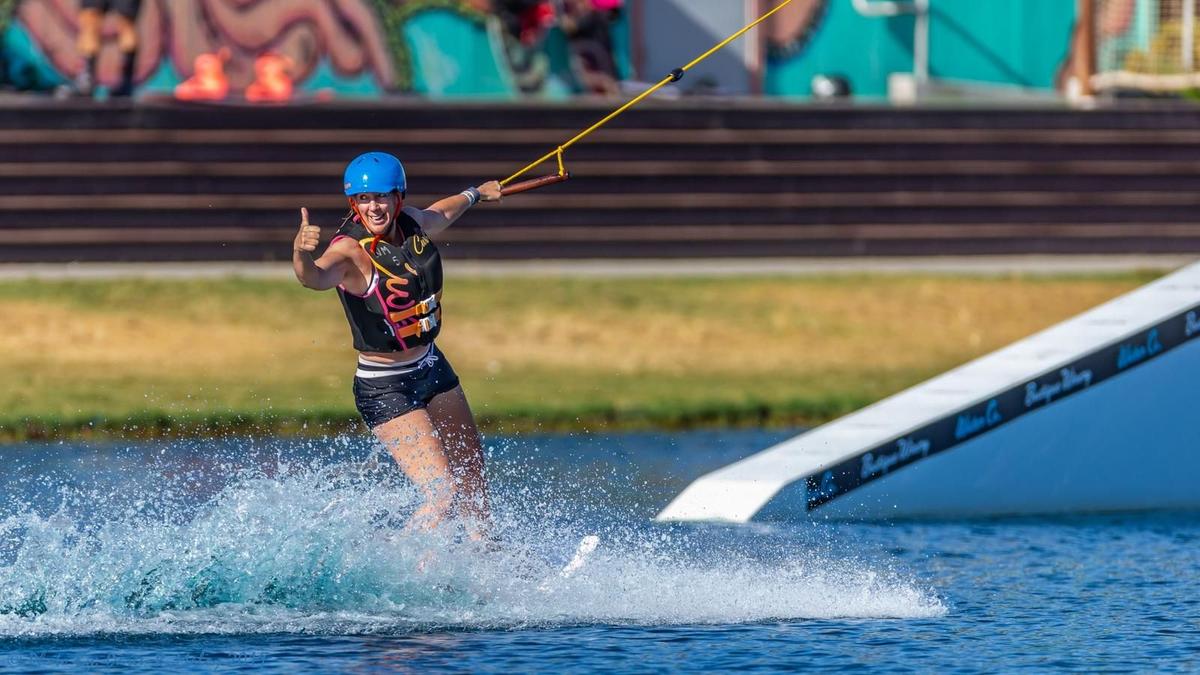
If you have ever watched someone glide across the water on a wakeboard and thought "I could never do that," you are probably underestimating yourself. Cable wakeboarding is one of the most beginner-accessible watersports out there, and it is considerably easier to learn than traditional boat-towed wakeboarding. The main reason: a cable system gives you a smooth, consistent pull from the moment you stand up. There is no acceleration surge, no boat wake to fight, and no waiting around between turns. You fall, you swim to the dock, and you go again.
This guide covers everything a first-timer needs to know before showing up at a cable park, including what to expect, what to bring, and the tips that will actually help you get up on your first session.
What Is Cable Wakeboarding?
Traditional wakeboarding uses a motorboat to pull the rider across the water. Cable wakeboarding swaps the boat for an overhead cable system mounted on a series of towers anchored around a lake or pond. The cable loops continuously around the circuit at a set speed, and you grab a handle attached to a rope that drops down from the cable. When the cable pulls the rope taut, it pulls you forward and (if you do your part) up onto the board.
Most cable parks run two types of setups: a full-size main cable and a beginner training cable. The main cable is a complete loop around the lake, typically running at speeds from about 18 to 22 mph. It usually includes obstacles like rails and kickers for intermediate and advanced riders. The training cable (also called a 2.0 cable or T-bar) is a shorter, back-and-forth system that runs at a slower speed, usually around 14 to 16 mph. That reduced speed and shorter run make it much more forgiving for people learning the basics.
Velocity Island Park runs both a main cable and a dedicated training cable, which means beginners never have to share water with advanced riders flying off ramps.
What to Expect on Your First Session
When you arrive, staff will walk you through a brief orientation covering how to position yourself on the dock, how to hold the handle, and the hand signals used on the water. Pay attention here: it takes about two minutes and saves a lot of confusion on the water.
Your first few attempts will probably look like this: you get into position in the water, the cable picks up tension, you try to stand, and you fall face-first. That is completely normal. The most common beginner mistake is trying to pull yourself up by yanking on the handle. The cable does the pulling. Your job is to stay in a tight squat and let it lift you.
By the end of a typical first session (one to two hours), most people manage to get up and ride at least a short distance. Some people are riding the full length of the training cable within their first hour. Progress varies, but the learning curve on a training cable is genuinely fast.
Falls are part of it. The water is not hard at low training cable speeds, and a life jacket keeps you on the surface immediately. Most people find falling less intimidating than they expected once they have done it a couple of times.
Gear You Need
Here is what the park provides versus what you need to bring yourself.
What the park provides (rental or required equipment): Wakeboard and bindings are available to rent if you do not own your own gear. A certified life jacket is required for all riders and is provided at no extra charge. A helmet is also required for all riders on the training cable and recommended on the main cable. Helmets are available to borrow at the dock.
What to bring: Wear a swimsuit or board shorts. Avoid baggy clothing that catches water. A rash guard or athletic shirt is fine and can help with sun protection. Water shoes or old sneakers are a good idea if you have sensitive feet, though many riders ride barefoot in their board bindings. Bring sunscreen, a water bottle, and a dry change of clothes. A small dry bag for your phone is also worth it.
You do not need to own any wakeboarding equipment to try cable wakeboarding. Everything you need to get on the water is available through the Pro Shop.
Training Cable vs. Main Cable
The training cable at Velocity Island runs as a short back-and-forth system at a slower, more manageable speed. You start at one dock, ride to the far end, let go, swim to the exit dock, and walk back to do it again. Because the run is short and the speed is lower, you get more attempts per hour and have more time to process what went wrong (or right) before the next try.
The main cable is a continuous loop around the full lake. It runs faster, and it includes features like kickers (small ramps) and rails for riders who want to start learning tricks. Most people move to the main cable after a few sessions on the training cable, once they can ride comfortably in a straight line and make basic edge-to-edge transitions.
There is no pressure to rush to the main cable. Plenty of riders spend an entire summer on the training cable just working on their riding position and are perfectly happy with that. The main cable will still be there when you are ready.
Tips to Get Up Faster
These are the cues that instructors repeat most often to beginners, because they are the ones that actually make the difference:
- Arms straight, elbows locked. If you bend your elbows and try to pull yourself up, you will tire out and fall. Keep your arms straight and let the rope do its job.
- Stay in the squat. Think of the starting position as sitting in a chair that is just below the water surface. Keep your knees bent and your weight back on your heels. Do not try to stand up early.
- Look at the horizon. New riders almost always look down at the board. Looking down shifts your weight forward and tips you over. Pick a point on the far shore and stare at it.
- Let the cable pull you up, not forward. The cable will naturally lift you as it takes tension. Resist the urge to lunge forward. Stay patient in the squat and let the pull bring you to your feet.
- When you fall, let go. Holding onto the handle when you fall pulls you forward into the water awkwardly. Release the handle the moment you lose balance.
How Quickly Can You Progress?
Most beginners get their first clean ride within three to five sessions. That does not mean they are riding the full main cable circuit yet, but they can get up, hold their edge, and travel a meaningful distance without falling. That is enough to start having a genuinely fun time.
Moving from the training cable to the main cable typically happens within a season for riders who come out a few times per month. At that point you can start working on toe-side riding (turning so you are facing backward relative to your direction of travel), which opens up a lot of the more interesting maneuvers.
First tricks, such as surface spins and small jumps off the kicker, tend to come in the second season for recreational riders who are putting in regular time. That timeline compresses significantly if you ride weekly. Cable wakeboarding rewards consistent practice more than raw athleticism.
The main thing is to not judge your progress against advanced riders you see on the main cable. Those people have often been riding for years. On the training cable you will be surrounded by other beginners, and the atmosphere is relaxed and encouraging.
Ready to Try It?
The Velocity Island Wakeboard Park is open weekends starting in May and daily through the summer. Both the training cable and the main cable are available, and board rentals are included with your session fee. Check the pricing page for current session rates and hours, and complete your waiver online before you arrive to save time at check-in.
The first session is the hardest one. After that, it gets a lot more fun, fast.